Man’s best friend, or man’s best nurse? 61% say pets provide major comfort
Pets

Audio By Carbonatix
By Justin Colline for Burd Home Health, Stacker

Man’s best friend, or man’s best nurse? 61% say pets provide major comfort
When recovery happens at home, the environment matters.
Hospital discharge rates are rising. Chronic conditions are increasingly managed in living rooms rather than in clinics. And in many of those homes, someone else is already on duty.
A February 2026 survey of pet owners finds that 61% say their pet provides a great deal of comfort. It is more than a sentimental statistic. It reflects a shift in how Americans experience care, coping, and daily stability inside their own homes.
As healthcare continues moving beyond hospital walls, the quiet role of pets is becoming harder to ignore. Burd Home Health shares findings from a new survey on the role pets play in recovery and daily wellness.
Key Findings
- 61% of pet owners say their pet provides a huge amount of comfort.
- 96% feel their pet is a key part of their mental well-being.
- 72% have stayed more consistent with medication, hydration, or meals because their pet kept them in a routine.
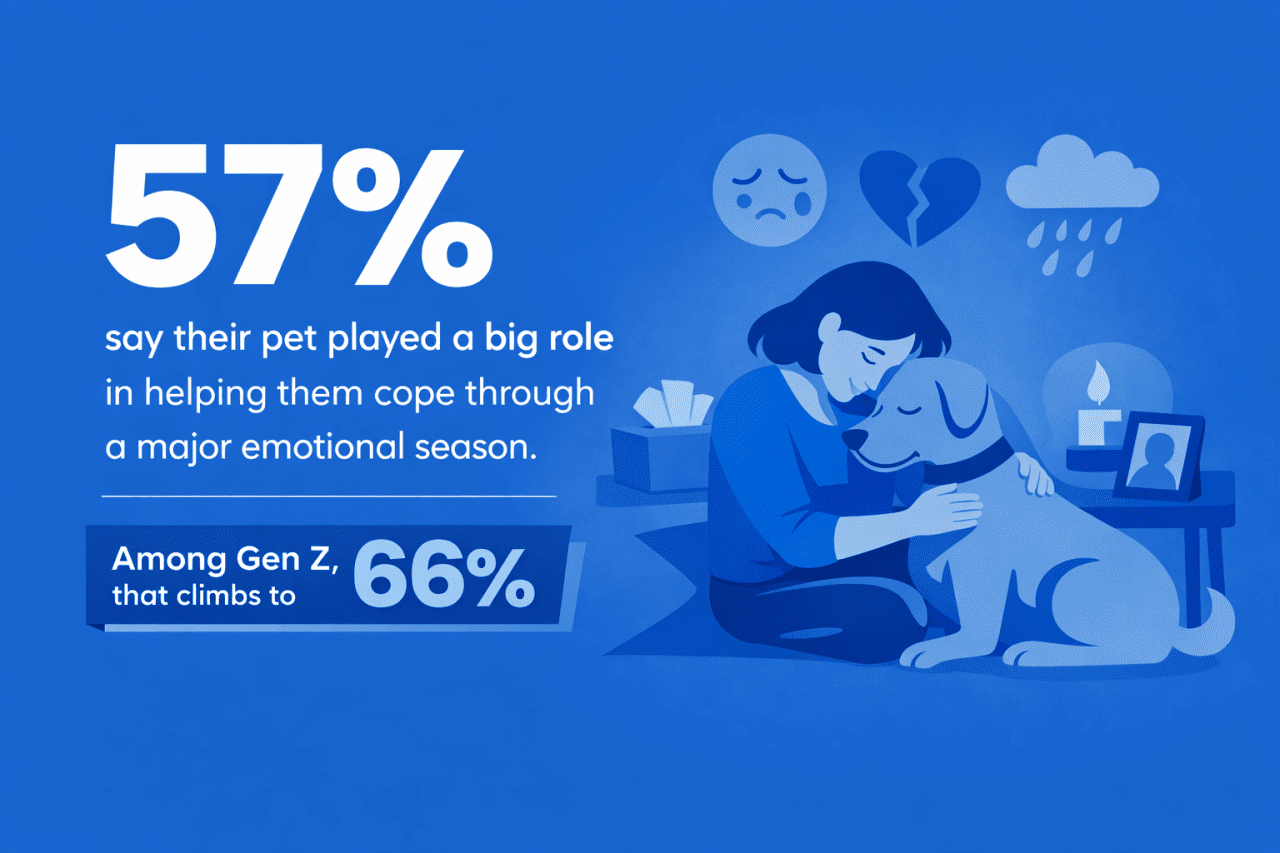
- 57% say their pet played a big role in helping them cope through a major emotional season.
- 58% say pet-friendly care would be extremely important if they or a loved one needed at-home care.
- 75% believe pets reduce loneliness a lot for people who spend significant time at home.
- 98% agree that pets deserve more recognition as part of the support system for people healing at home.
Comfort Is the Entry Point
Emotional support often begins with presence.
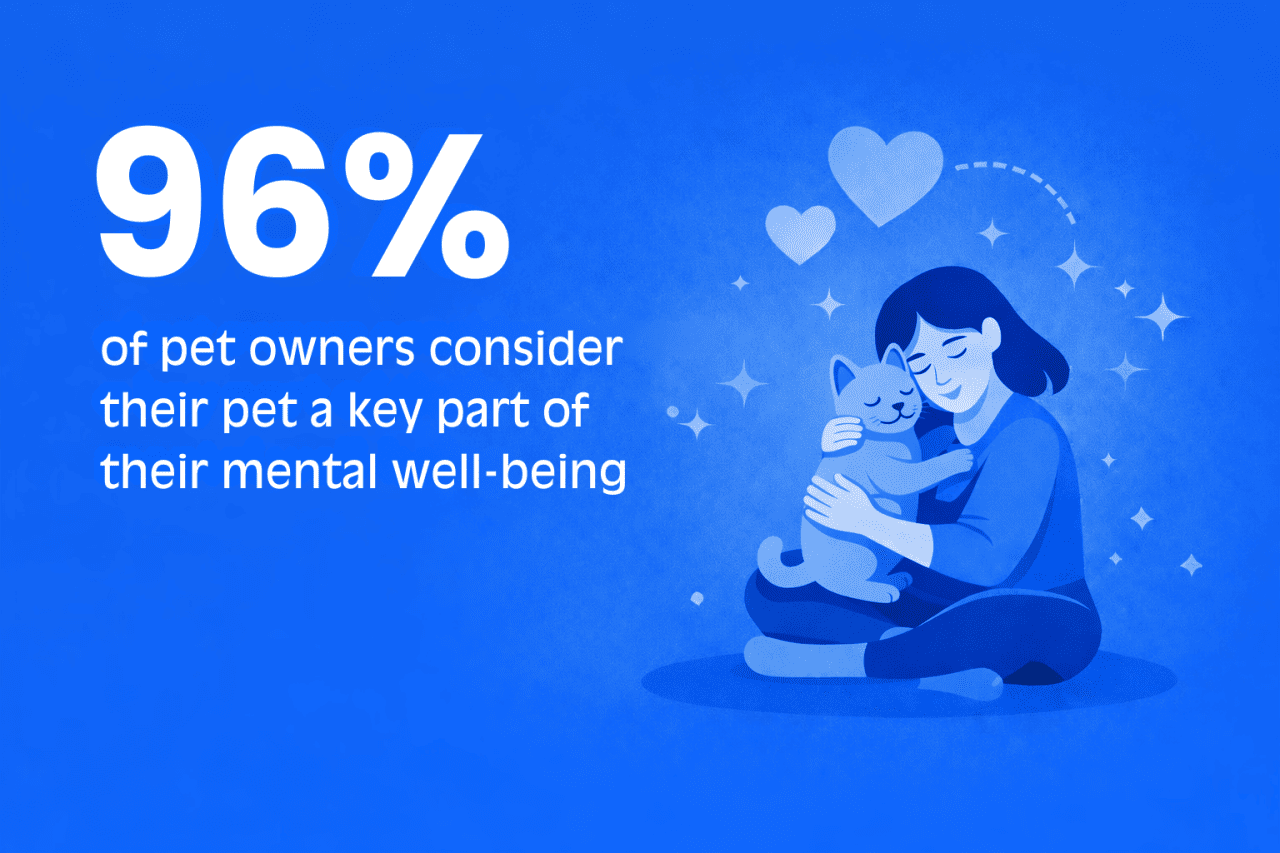
The survey shows 96% of pet owners consider their pet a key part of their mental well-being. That level of agreement is rare in public opinion research. It signals that pets are not viewed as background companions. They are integrated into how people regulate stress and process emotion.
When people feel overwhelmed, many turn to their animals before anyone else. Thirty-one percent of pet owners say they open up to their pet first. Nearly half of dog owners and 42% of cat owners talk to their pet daily about how they are feeling.
In a culture marked by social fatigue and constant digital interaction, pets offer something simple: attention without judgment.
Routine Becomes Treatment
Comfort alone does not explain the data.
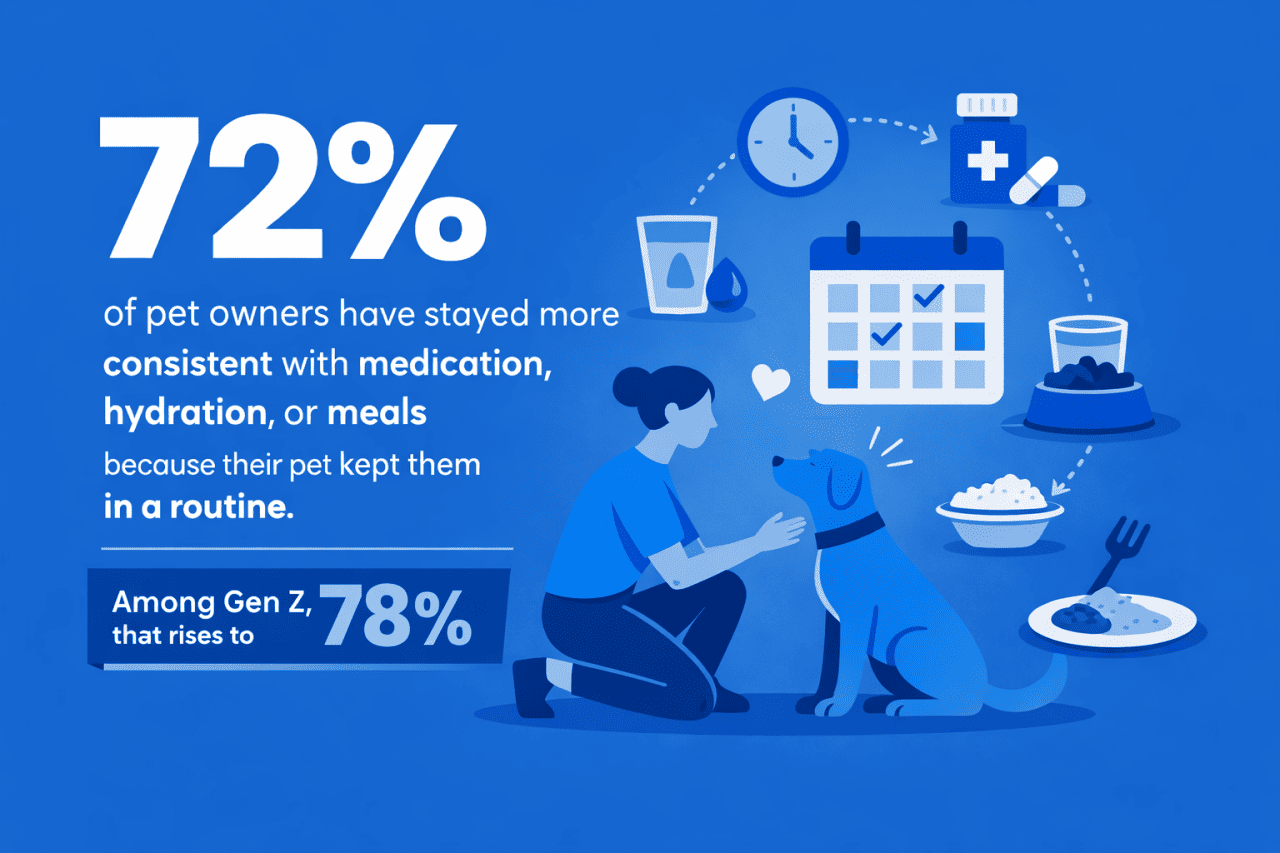
The survey finds 72% of pet owners have stayed more consistent with medication, hydration, or meals because their pet kept them in a routine. Among Gen Zers, that rises to 78%.
Routine is often the first thing to slip during illness or emotional strain. Pets interrupt that slide. Feed times require waking up. Walks demand movement. Even basic care tasks create structure.
That structure can have a measurable impact. A person who gets up to let the dog out may also take their morning medication. A scheduled feeding time may prevent skipping meals. In homes where recovery unfolds slowly, rhythm can support resilience.
Loneliness Is a Health Factor
Time at home can bring isolation, especially for older adults or those managing chronic conditions who rely on at-home care services.
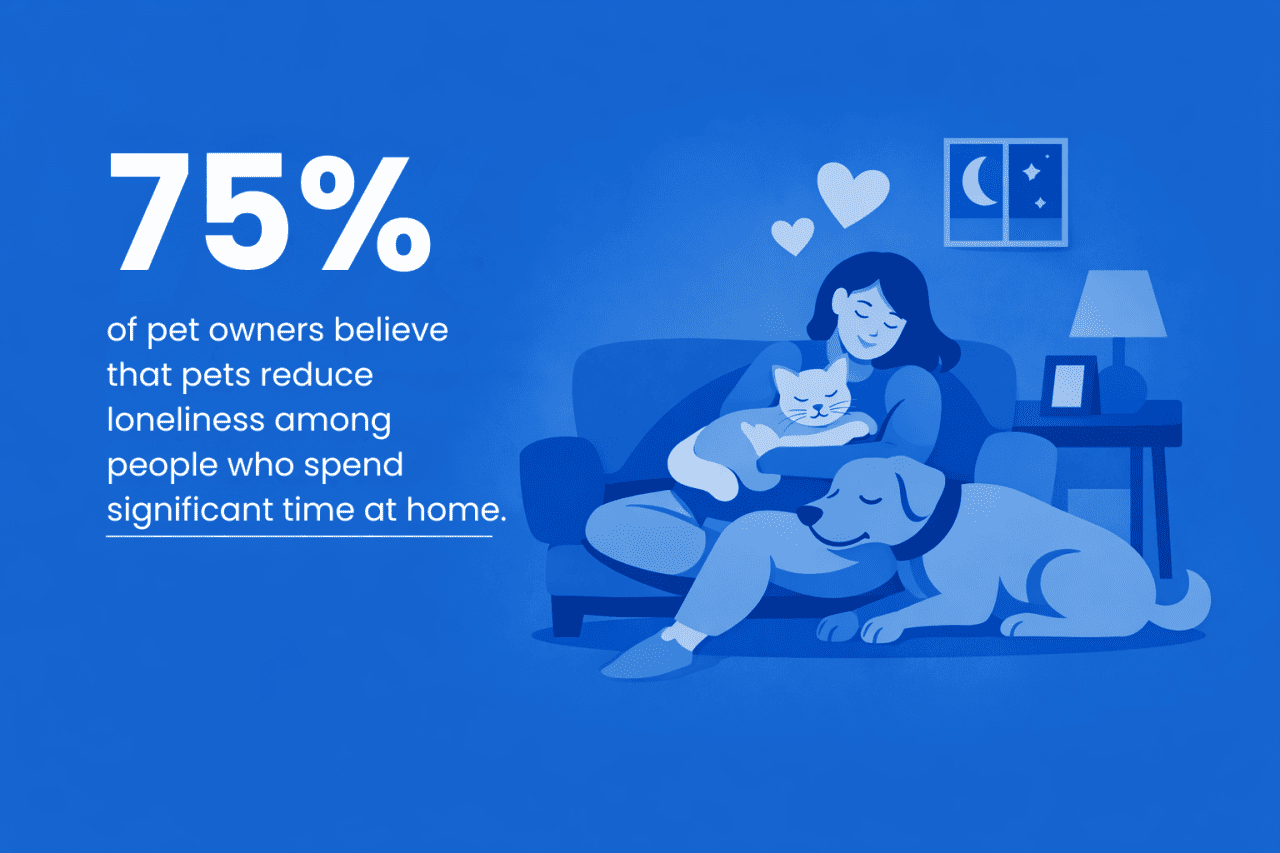
Three-quarters of respondents (75%) believe that pets reduce loneliness among people who spend significant time at home. At the same time, 60% believe their pet can sense when they are not feeling well.
Whether animals truly detect illness is a scientific question. The perception, though, matters. Feeling noticed can reinforce connection, and connection is increasingly discussed as protective in public health research.
Pets may not replace human relationships, but they appear to buffer isolation in ways people clearly feel.
A Generational Shift in Support
The emotional weight of pets is even stronger among younger adults.
A third of millennial pet owners describe their pet as a family member.
Younger generations have grown up during economic instability, COVID-19 pandemic disruption, and heightened awareness of mental health. Their definition of support looks different.
For many, pets are not a supplement to coping. They are part of the foundation.
Care at Home Is Changing Expectations
The findings point to a larger implication.
If healthcare increasingly happens at home, then the realities of home life matter. And for millions of households, home life includes animals.
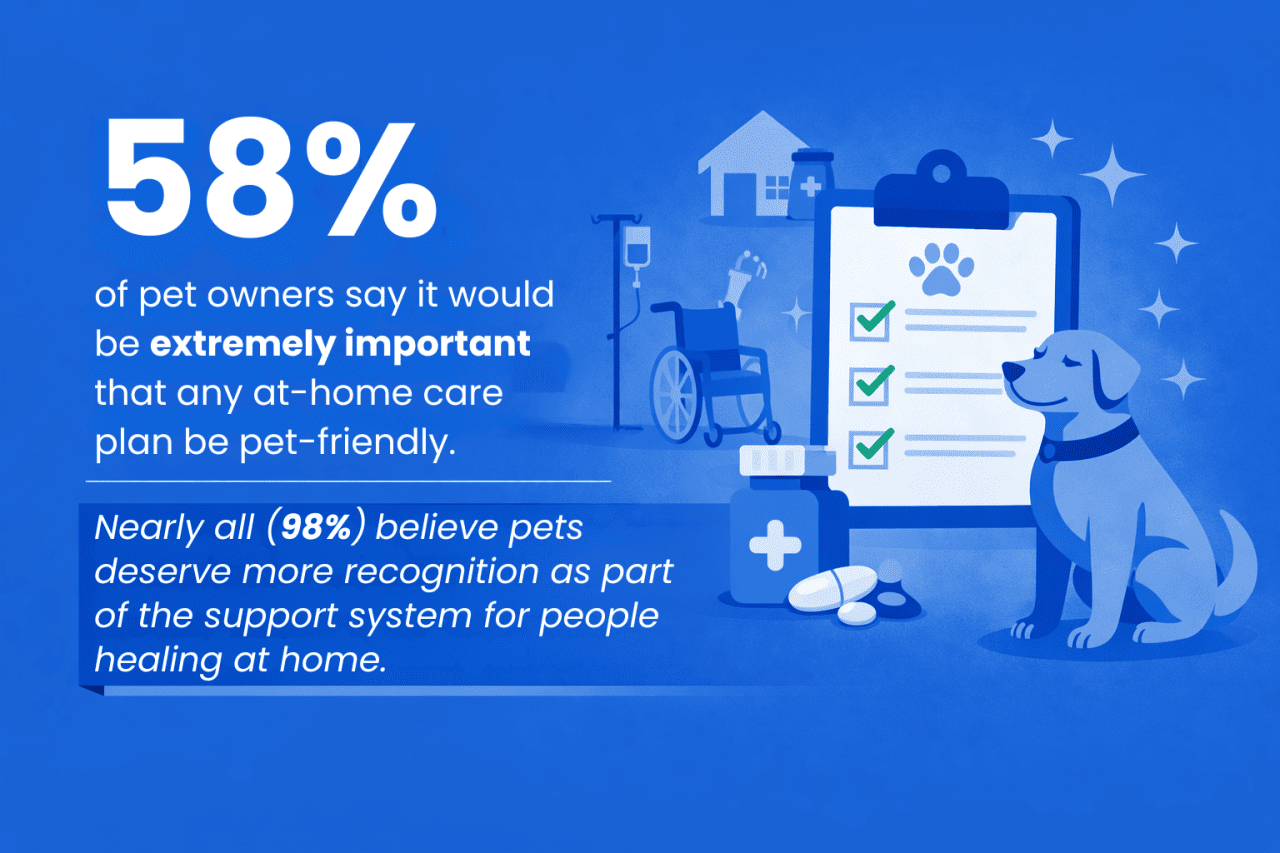
More than half of respondents (58%) say it would be extremely important that any at-home care plan be pet-friendly. Nearly all (98%) believe pets deserve more recognition as part of the support system for people healing at home.
That level of agreement suggests the public may already see pets as part of the caregiving structure. Formal care models have been slower to reflect that view.
When patients recover at home, support is not limited to clinicians and family members. It includes the dog that insists on a morning walk and the cat that curls up during a difficult afternoon.
The Takeaway
For decades, “pet therapy” meant trained animals visiting hospitals.
The survey suggests something quieter but widespread. Therapy is already happening at home.
Pets do not write care plans. They do not administer medication. Yet for many Americans, they provide comfort, structure, and steady companionship that shape how healing unfolds.
As home-based care expands, the four-legged presence in the room may not be incidental. It may be part of how recovery works.
Methodology
To understand how Americans view the role of pets in healing and at-home care, we surveyed 1,000 adults nationwide who currently own a pet on Feb. 4, 2026. Participants answered a series of questions about the emotional support their pets provide, the impact pets have on daily routines and health habits, and the importance of pet-friendly environments during recovery at home. Responses were analyzed by demographic groups, including age, gender, and income, to identify trends and generational differences.
This story was produced by Burd Home Health and reviewed and distributed by Stacker.