'Big polluter' dollars used for housing and transit projects
Regional News

Audio By Carbonatix
5:00 PM on Friday, December 12
Madeline Shannon
(The Center Square) - Republican legislators pushed back against California Gov. Gavin Newsom’s announcement that almost $865 million acquired from some of the state’s biggest emitters will pay for affordable housing and clean transportation projects, among other efforts funded by the state’s cap-and-trade program.
“We saw that in 2022, wildfires erased nearly 20 years of emission progress,” Assemblymember Tom Lackey, R-Palmdale and a member of the Assembly Transportation Committee, told The Center Square. “I’m a bit frustrated by that, and unfortunately, the administration still has no comprehensive wildfire prevention strategy. I think it’s a little bit disingenuous to brag about climate leadership while doing so little to stop the biggest source of our pollution and devastation - the wildfires.”
State Sen. Meghan Dahle, R-Redding, and a member of the Senate Transportation Committee, added that while she sees good housing projects being developed by the state’s cap-and-trade program, especially in rural communities, she also sees cap-and-trade increasing living expenses for most Californians.
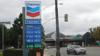
Gas Prices at Chevron Station in Simi Valley
Regular unleaded gas prices start at $4.559 a gallon at a Chevron station in Simi Valley, near Los Angeles, Nov. 20, 2025. Photo: Dave Mason / The Center Square.
“I am also very mindful that the cap-and-trade program is a tax on energy that drives up the cost of fuel for California drivers, who pay the highest pump prices in the nation to drive to work,” Dahle told The Center Square. “I recognize the good work being done, but we can’t tax our way out of the cost-of-living crisis in California.”
Six Democratic legislators, including the chairs of the transportation committees in the Assembly and Senate, were not available to speak to The Center Square on Friday. Five Republican legislators who are members of each chamber's transportation or housing committee were also not available to comment.
According to a press release sent out by Newsom’s office, the projects that will get portions of the cap-and-trade money include an expansion of public transit. Other projects include building affordable housing and rebuilding infrastructure damaged in this year’s wildfires, among other efforts. Projects also include buying 30 new zero-emission public transit vehicles, construction of 150 bus shelters, and the creation of 45 miles of bikeways and 20 miles of walkways, the governor’s office said.
The cap-and-trade program requires big emitters to buy “allowances” for the greenhouse gases they emit, the governor’s office said, generating billions of dollars in funding over the years that go into projects that reduce greenhouse gas emissions.
In all, 39 affordable housing projects in 21 communities across the state will get some of this money and major sustainable transportation upgrades, the governor’s office said.
According to a report from the Center for Climate and Energy Solutions, California’s cap-and-trade program is one of the largest cap-and-trade projects in the world. The program is a big part of the state meeting its greenhouse gas emission goals. Five billion dollars has been generated since the Golden State launched the cap-and-trade program in 2012. A database from the International Carbon Action Partnership identifies agriculture, forestry fuel use, mining and extractives, transport, buildings and power as the economic sectors or industries that are included in the program.
Lindsay Buckley, the communications director for the California Air Resources Board, said the money comes from the state’s Greenhouse Gas Reduction Fund, which is financed by the state’s cap-and-trade program. The program is more than a decade old and has generated more than $33 billion that have been re-invested into climate-related projects, like affordable housing and sustainable communities.
Companies that include oil refineries and food processing facilities are part of the program, Buckley told The Center Square on Friday. They are some of the companies that are considered what Newsom called “the biggest polluters” in the state.
“We refer to them as just the state’s biggest emitters, and literally, on paper, they are the ones that emit the most greenhouse gas emissions in the state,” Buckley said.
More than $453.5 million went to grants that pay for transportation projects close to schools, workplaces and other common destinations, the governor’s office said. An additional $185.6 million will go to rebuilding infrastructure in Los Angeles after the damage of this year's wildfires.
“The funding puts billions of dollars to work reducing greenhouse gas emissions, strengthening the economy, and improving public health and the environment -- especially in disadvantaged communities,” said Kalin Kipling-Mojaddedi, communications lead for the Governor’s Office of Land Use and Climate Innovation.
“California is using California Climate Investment funds to protect health, stability, and opportunity across the state," Kipling-Mojaddedi wrote The Center Square in an email Friday.
Officials with the California Environmental Protection Agency, the California State Transportation Agency, the California Transportation Commission, the California Department of Transportation and the California Housing Finance Agency were not available or declined to answer questions on Friday.