Supreme Court to hear Alaska plane seizure case Tuesday
National News

Audio By Carbonatix
6:04 AM on Saturday, November 28
Andrew Rice
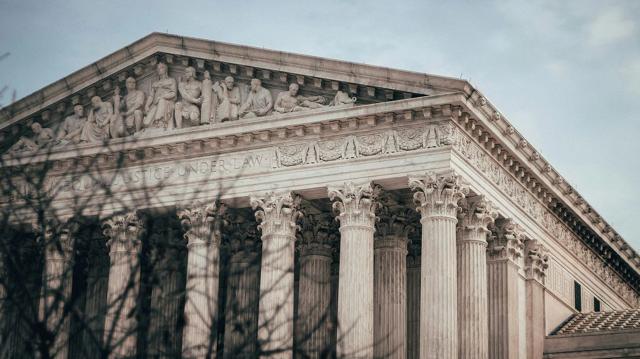
(The Center Square) - The U.S. Supreme Court will hear arguments Tuesday in a case over whether an Alaska man’s plane can be confiscated after one of his passengers brought beer with alcohol into a village where alcohol is illegal.
The case, Jouppi v. Alaska, focuses on bush pilot Kenneth Jouppi, whose plane was confiscated after a passenger brought a six-pack of Budweiser to Beaver, Alaska, according to court documents. Jouppi runs a business taking people on tours to remote locations in Alaska.
Across Alaska, villages may enact “dry” laws that make it a state crime to send or transport alcoholic beverages in communities. Jouppi’s lawyers argued that seizing his plane, valued at $95,000, violates the excessive fines clause in the Constitution.
The Eighth Amendment reads: “Excessive bail shall not be required, nor excessive fines imposed, nor cruel and unusual punishments inflicted.”
The clause limits the kind of financial penalties the government can impose. Matthew Cavedon, director of the Cato Institute’s project on criminal justice, said penalties like Alaska's are far-reaching and can have an outsized effect on ordinary Americans who unknowingly break the law. He pointed to people who possess marijuana in a state where it is illegal or fail to fill out a tax form properly.
“Mr. Jouppi’s case highlights that sometimes even pretty innocuous things can trigger huge consequences,” Cavedon told The Center Square in an interview.
The state's lawyers argued that Alaska faces unique challenges with alcoholism, with limited medical resources contributing to a substantially higher mortality rate than in the rest of the country.
“Alcohol abuse in rural Alaska leads to increased crime; disorders, such as alcoholism; conditions, such as fetal alcohol spectrum disorder; and death, imposing substantial costs on public health and the administration of justice,” lawyers for Alaska wrote in a brief to the high court. “Within this context, it is clear that the illegal importation of even a six-pack of beer causes grave societal harm. This factor strongly suggests that the forfeiture is not grossly disproportional.”
Jouppi's lawyers and Cavedon argued that Alaska cannot invoke alcoholism’s wider societal harm to justify the penalty against him.
“The excessive fines clause just sets the default as: ‘You got to have a fine that respects the ability of a person to pay and that recognizes the specific contribution of that person's wrongdoing due to the social problem,’ rather than saddling one person unfairly with the burden of a much larger social problem, which is absolutely what we think Alaska is trying to do here,” Cavedon said.
Cavedon said that Jouppi’s livelihood depends on his ability to fly people to remote villages across Alaska. He said the forfeiture falls squarely into the category of an excessive fine.
“This is a major imposition on his ability to sustain himself,” Cavedon said. “He is being economically disabled by this. Historically, that's a big deal that the law cared a lot about when considering whether a fine was excessive.”
The state's lawyers countered that Jouppi owned a second plane, was “pretty much retired,” and would “probably just sell” the plane at issue in the case.
“It is undisputed that the forfeiture of one of Jouppi’s planes would not deprive him of his livelihood,” lawyers for Alaska wrote. “None of Jouppi’s supposed mitigating circumstances alters the constitutional analysis.”
Cavedon said the issue before the court can be resolved simply by a plain reading of the Eighth Amendment’s text. He said the history of the excessive fines clause points to a vision in which the founders understood the need for an appropriate balance between laws that prohibited certain activities and the just punishment for breaking them.
“At the time that the excessive fines clause was enacted, it meant that a fine had to be proportionate to the crime and to be proportionate to the ability of the person facing the fine to pay it,” Cavedon said.
Cavedon said he would be surprised if the justices sided with Alaska, noting that the Supreme Court typically takes cases to set a standard or reverse a decision it disagrees with.
“I might be mistaken, but I'm feeling optimistic about this,” Cavedon said. “I am curious to see if they are going to say more about civil forfeiture as a regime because we've got concerns about civil forfeiture that go beyond this case.”